Introduction
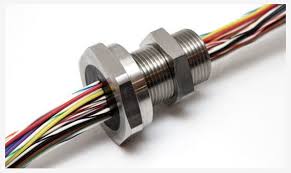
Hermetic feedthroughs are specialized components that allow electrical or optical signals to pass through sealed barriers while maintaining airtight or vacuum-tight integrity. They are critical in applications where signal reliability is essential, including aerospace, defense, medical, industrial, and scientific systems. By combining robust materials, precise engineering, and hermetic sealing, these feedthroughs ensure uninterrupted signal transmission in even the harshest environments.
1. Maintaining Electrical Isolation
One of the main ways hermetic feedthrough enables reliable signals is by providing electrical isolation between conductors and the external environment. Ceramic or glass insulators prevent electrical leakage, short circuits, and cross-talk between adjacent pins, which is vital in multi-channel systems or high-voltage applications. Proper isolation ensures that signals remain stable and accurate under operational stresses.
2. Protection from Environmental Factors
Hermetic feedthroughs protect signal-carrying conductors from moisture, dust, corrosive gases, and temperature extremes. Environmental contamination can degrade signal quality or cause complete failure. By maintaining a sealed barrier, feedthroughs prevent interference from external factors, enabling reliable operation in harsh industrial, aerospace, or underwater conditions.
3. Mechanical Stress Resistance
Signal integrity can be compromised by vibration, shock, or mechanical stress. Hermetic feedthroughs are designed with robust housings, stress-relief features, and reinforced seals to absorb mechanical loads without affecting the conductors or signal pathways. This ensures that signals remain consistent even during high-vibration or impact conditions, such as in satellites, aircraft, or military systems.
4. Thermal Stability
Temperature fluctuations can affect both the physical dimensions of conductors and the electrical properties of insulation materials, potentially disrupting signal transmission. Hermetic feedthroughs are engineered using materials with matched thermal expansion coefficients, such as metals, ceramics, and glass, to maintain structural integrity and insulation performance. This allows continuous, reliable signal transmission even under extreme thermal cycling.
5. Multi-Channel and High-Density Signal Transmission
Modern applications often require multiple signals to pass through a single feedthrough, including high-speed data, power, or optical signals. Hermetic feedthroughs support multi-pin, coaxial, and fiber-optic designs, allowing dense signal transmission while preventing interference or leakage. This capability is essential for satellite communications, scientific instruments, and complex industrial systems.
6. Testing and Quality Assurance
Hermetic feedthroughs undergo rigorous testing to ensure signal reliability:
- Electrical continuity and insulation testing
- Helium leak testing to confirm seal integrity
- Thermal cycling to simulate extreme environments
- Vibration and shock testing for mechanical resilience
These tests confirm that feedthroughs maintain both hermeticity and signal integrity in demanding applications.
Conclusion
Hermetic feedthroughs enable reliable signal transmission by combining airtight sealing, electrical isolation, mechanical resilience, and thermal stability. They are crucial in applications where signal failure is not an option, including aerospace, defense, medical devices, industrial equipment, and scientific research. Through careful material selection, robust design, and rigorous testing, hermetic feedthroughs ensure continuous, accurate, and interference-free signal transmission in even the harshest operating conditions.